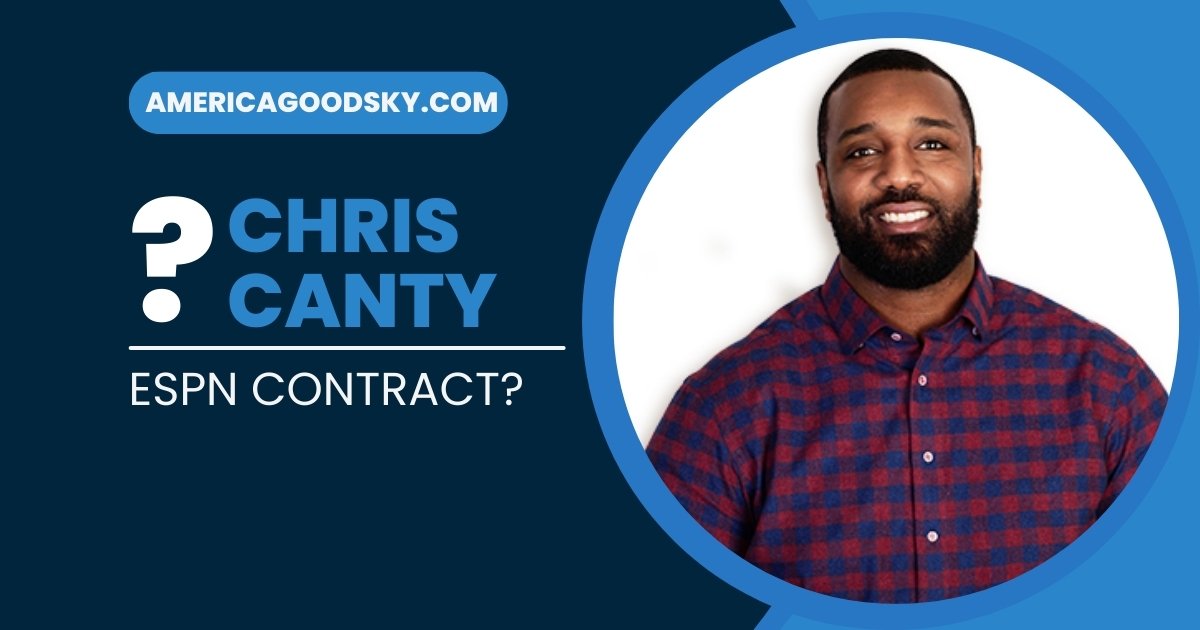
Chris Canty transformed his NFL success into a thriving sports media career that continues to captivate audiences nationwide. The former defensive lineman who hoisted the Lombardi Trophy now breaks down the game from ESPN’s studios, bringing insider perspective that only a Super Bowl champion can provide. His journey from Charlotte’s high school fields to network television exemplifies the modern athlete’s evolution.
Understanding Chris Canty’s net worth and ESPN contract details reveals how strategic career planning creates lasting financial stability. Unlike many retired players who struggle after football, Canty built a second act that rivals his playing days in both influence and income.
Chris Canty’s ESPN Contract
Canty’s transition to ESPN sports analyst happened seamlessly after his 2013 retirement. He joined the network’s roster of former players who provide expert commentary, quickly establishing himself as a credible voice in sports broadcasting. His ability to articulate complex defensive schemes in accessible language made him an instant asset.
Contract Details and Terms
The Chris Canty ESPN contract reportedly places him among mid-tier analysts at the network. While ESPN doesn’t publicly disclose exact figures, industry insiders estimate his ESPN analyst contract falls within the $200,000-$400,000 annual range. This positions him competitively among former players in similar roles.
Key contract elements include:
- Multi-year commitment with performance review clauses
- Escalating compensation based on show ratings
- Bonuses for special event coverage (playoffs, Super Bowl)
- Digital content creation obligations
- Social media engagement requirements
His ESPN agreement renewal negotiations typically occur every 2-3 years, allowing both parties to reassess market value. Compared to top-tier analysts earning seven figures, Canty’s ESPN salary reflects his growing but still-developing media presence.
Role and Responsibilities at ESPN
Canty wears multiple hats at ESPN. His primary responsibilities span television, radio, and digital platforms. He appears regularly on debate shows where his NFL experience provides authenticity that pure journalists can’t match.
His workload includes:
- Daily preparation reviewing game film and statistics
- Pre-production meetings with show producers
- Live on-air analysis during studio shows
- Post-game breakdowns and player evaluations
- Social media interaction with fans and critics
The ESPN commentator role demands more than football knowledge. Canty developed television presence, learning camera angles, teleprompter reading, and the art of concise, compelling commentary. His Canty broadcasting contract requires availability during peak NFL seasons, essentially mirroring his playing career schedule.
ESPN Radio and Sports Commentary
ESPN Radio shows form a significant portion of Canty’s media footprint. He co-hosted “Unsportsmanlike” alongside Michelle Beadle and Bomani Jones, bringing defensive perspective to national sports radio discussions. The show’s debate format showcased his ability to defend positions passionately yet professionally.
His radio sports analyst work differs from television appearances. Radio demands extended verbal stamina, filling airtime without visual aids. Canty adapted quickly, using storytelling and player anecdotes to maintain listener engagement. His ESPN Radio host duties expanded his brand beyond traditional TV viewers.
Current Net Worth and Financial Overview
Estimated Net Worth Figures
Chris Canty’s net worth currently sits between $12-15 million, according to financial tracking sites and industry estimates. This Chris Canty wealth accumulation stems from nine NFL seasons plus nearly a decade in broadcasting. His Canty net value reflects smart money management and diversified income streams.
| Income Source | Estimated Annual Contribution |
| ESPN Salary | $250,000 – $400,000 |
| Endorsements | $50,000 – $100,000 |
| Speaking Fees | $75,000 – $150,000 |
| Investments | $100,000 – $200,000 |
| Other Ventures | $50,000 – $100,000 |
His Chris Canty finances show consistent growth post-retirement, avoiding the financial pitfalls that plague many former athletes. Smart Chris Canty earnings management has positioned him for long-term security.
Primary Sources of Income
The ESPN sports analyst salary forms Canty’s primary current income. However, diversification protects against single-source dependency. His sports media career opened doors to corporate speaking engagements where companies pay premium rates for athlete motivational talks.
Chris Canty money flows from multiple channels:
- Base ESPN compensation for regular appearances
- Performance bonuses tied to viewership metrics
- Endorsement partnerships with sports brands
- Paid podcast guest appearances
- Football camp hosting fees
- Consulting work for youth organizations
His broadcasting platform elevated his marketability exponentially. The career earnings overview demonstrates how media visibility converts into financial opportunities beyond salary.
Business Investments and Ventures
Business investments ventures occupy increasing importance in Canty’s portfolio. He’s invested in real estate investments across multiple markets, generating passive income through rental properties. His post-NFL investments strategy focuses on long-term appreciation rather than speculative gains.
Smart financial ventures include:
- Commercial real estate in Charlotte and New York
- Minority ownership stakes in sports-related startups
- Restaurant and hospitality industry investments
- Stock portfolio managed by financial advisors
- Youth sports facility partnerships
His investment portfolio benefits from networking opportunities within sports and media circles. Fellow former players often collaborate on business ventures, pooling resources and expertise.
Financial Stability and Lifestyle
Canty maintains a comfortable yet not ostentatious lifestyle. His Chris Canty finances support his family without the excessive spending that drains many athlete fortunes. He resides primarily in the New York area, maintaining proximity to ESPN’s Connecticut headquarters.
The financial overview reveals someone who learned from cautionary tales of bankrupt former stars. He employs professional financial advisors, maintains emergency funds, and prioritizes investment over consumption. His children’s education funds remain fully funded, securing their futures regardless of his working status.
NFL Contract History and Earnings
Notable Contracts with NFL Teams
Canty’s NFL contract earnings began modestly with a fourth-round rookie deal. The Dallas Cowboys signed him to a professional football contract worth approximately $2.3 million over four years with a $356,000 signing bonus. These rookie-scale pro football deals rarely create wealth, serving instead as proving grounds.
His New York Giants contract represented his financial breakthrough. The Giants signed Canty to a lucrative six-year deal worth $42 million in 2009, including $12 million guaranteed. This Giants NFL contract made him one of the league’s better-paid defensive linemen at the time.
Contract timeline:
- 2005-2008: Dallas Cowboys – $2.3M total
- 2009-2012: New York Giants – $42M total
- 2013: Baltimore Ravens – $4M (one year)
His NY Giants salary peaked around $7-8 million annually during prime years. The Giants contract details included performance incentives tied to sacks, tackles, and playoff appearances.
Signing Bonuses and Endorsements
Signing bonuses provided immediate liquidity throughout his career. The Giants defensive lineman deal included that crucial $12 million upfront, changing his financial life overnight. These guaranteed amounts provided security against injury-related career endings.
NFL career income from bonuses totaled approximately $14-15 million across all contracts. Endorsement opportunities remained limited compared to skill position players, but local deals with car dealerships and restaurants supplemented his football contract earnings.
NFL Career Salary Progression
Canty’s NFL salary history shows typical trajectory for solid defensive players. His rookie contract paid league minimum ($230,000-$450,000 annually), barely covering expenses in expensive cities. The Giants six-year deal elevated him to middle-class NFL wealth.
Yearly earnings progression:
- Rookie season: ~$230,000
- Years 2-4: $400,000-$600,000
- Giants years: $5-8 million annually
- Final season: ~$4 million
Total career earnings from NFL pay exceeded $48 million before taxes and agent fees. After deductions, his lifetime earnings from playing netted approximately $25-30 million substantial wealth requiring careful stewardship.
Chris Canty’s NFL Career Overview
Draft Entry and Early Years
The 2005 NFL Draft saw Dallas select Canty 132nd overall. Fourth-round picks face steep odds; many never establish themselves. Yet his combination of size (6’7″, 317 pounds) and athleticism suggested potential that Cowboys scouts recognized.
His rookie season with the Cowboys brought typical growing pains. Limited to special teams and situational defensive snaps, Canty absorbed NFL speed and complexity. Veteran defensive ends mentored him, teaching professional preparation habits.
Key Teams: Dallas Cowboys, New York Giants, Baltimore Ravens
Dallas Cowboys (2005-2008) provided his foundation. He developed into a reliable rotation player, showing flashes of dominance. However, a serious knee injury in 2008 threatened his career trajectory and complicated contract negotiations.
New York Giants (2009-2012) defined his career. The Giants defensive lineman position suited his skill set perfectly. He started opposite Justin Tuck in the defensive line rotation, creating havoc in opponents’ backfields. His Super Bowl XLVI championship victory against the Patriots represents his career pinnacle.
Baltimore Ravens (2013) offered one final season. Though his production declined, his veteran leadership benefited younger players. He understood this would conclude his professional football career, savoring every moment.
Playing Position and Role
Canty excelled as a defensive end in 4-3 schemes, utilizing his length to bat passes and set edges against the run. His defensive tackle role in 3-4 alignments showcased versatility. Coordinators valued his ability to occupy blockers, freeing linebackers to make plays.
His NFL defensive line responsibilities included:
- Setting the edge against outside run plays
- Collapsing pocket from interior pressure
- Two-gap technique eating double-teams
- Pursuing ball carriers sideline-to-sideline
- Defending against play-action passes
The interior lineman work rarely generates headlines, but coaches and teammates recognized his value. His football defense position required physicality, technique, and relentless effort.
Career Achievements and Honors
Super Bowl XLVI champion headlines his resume. That February 2012 victory over New England validated his career and secured his financial future. The championship bonus, ring, and elevated contract leverage proved invaluable.
Other accolades include:
- 100+ games played across nine seasons
- Consistent starter for playoff-caliber teams
- Defensive player respected across the league
- Zero major off-field incidents or controversies
- Team captain and locker room leader
While he never achieved Pro Bowl selection, his NFL defensive lineman career represents success by any reasonable standard.
Statistics and On-Field Performance
Career Statistics and Milestones
Canty’s statistical production reflects his role more than individual dominance. Defensive lineman career numbers emphasize reliability over flashy sack totals.
| Category | Career Total |
| Games Played | 113 |
| Games Started | 80 |
| Total Tackles | 257 |
| Sacks | 23.5 |
| Forced Fumbles | 3 |
| Fumble Recoveries | 1 |
| Passes Defended | 16 |
His 2011 season produced career-best numbers: 48 tackles and 4 sacks. That performance helped propel the Giants to their championship run. His NFL lineman statistics might not dazzle, but context matters his assignment often prioritized occupying blockers rather than pursuing statistics.
Key Plays and Contributions
Memorable moments define careers beyond statistics. Canty’s strip-sack of Tony Romo in a Giants-Cowboys rivalry game stands out. His playoff performances during the Super Bowl run proved clutch when stakes peaked.
His Super Bowl XLVI contribution came through consistent pressure on Tom Brady. While he didn’t record a sack in that game, his disruption forced hurried throws that led to interceptions. Defensive coordinators design schemes around such contributions.
Injuries and Challenges
The 2008 knee injury nearly derailed everything. Canty tore his ACL, requiring surgery and extensive rehabilitation. His football career hung in balance as Dallas let him walk in free agency. The Giants gambled on his recovery, and he rewarded their faith.
Playing through lesser injuries became routine. Pain management, treatment protocols, and mental toughness separated NFL survivors from early retirees. His ability to play through discomfort extended his career and maximized earning potential.
College Football and Early Life
High School and Entry into College Football
Born in the Bronx but raised in Charlotte, North Carolina, Canty starred at Charlotte Latin School. College recruiters noticed his rare combination of height and athleticism. His high school dominance attracted Atlantic Coast Conference attention.
Multiple programs pursued him, but the University of Virginia offered the right combination of academics and athletics. The decision to attend UVA shaped his future, providing ACC competition and NFL exposure.
Career at University of Virginia
From 2001-2004, Canty developed into an NFL prospect. Virginia’s defensive coaching staff refined his technique, teaching him leverage principles that compensated for facing shorter, stronger opponents. His consistent production caught NFL scouts’ attention.
His college statistics showed steady improvement:
- Freshman: 15 tackles, 1 sack
- Sophomore: 38 tackles, 3 sacks
- Junior: 42 tackles, 5 sacks
- Senior: 51 tackles, 6.5 sacks
Notable Accolades and Impact
All-ACC honorable mention recognition validated his development. More importantly, his tape demonstrated NFL-caliber traits. Scouts noted his motor, length, and coachability intangibles that translate professionally.
His Virginia legacy includes mentoring younger players who followed him to the NFL. He maintained connections with the program, occasionally speaking to current players about navigating the professional football landscape.
Broadcasting and Post-Retirement Ventures
Transition to Sports Media
Canty prepared for broadcasting even before retirement. He enrolled in media training courses, learning camera presence and vocal techniques. Many players stumble transitioning careers; Canty planned deliberately.
His sports broadcasting debut came through local New York radio appearances during his playing days. These trial runs built confidence and connections. When retirement arrived, he already had audition tapes and industry relationships.
Roles on Sports Talk Platforms
ESPN Radio shows provided his breakthrough platform. “Unsportsmanlike” showcased his personality beyond football analysis. The show’s cancellation disappointed him, but other opportunities emerged. He rotated through various ESPN morning show slots, demonstrating versatility.
His TV sports analyst work expanded to studio shows like “First Take” and “Get Up!” These high-profile platforms elevated his recognition nationally. His ESPN on-air analyst reputation grew with each articulate, insightful appearance.
Other Media and Business Activities
Beyond ESPN, Canty explores various sports journalism avenues. Podcast guest appearances extend his reach to younger, digitally-native audiences. He’s discussed launching his own podcast, controlling content and monetization directly.
Speaking engagements command $10,000-25,000 per appearance. Corporate events value his dual perspective as champion athlete and successful media professional. His sports media career trajectory suggests continued growth and influence.
Fox Sports Appearances
Before fully committing to ESPN, Canty worked with Fox Sports on various projects. This multi-platform approach gave him leverage during ESPN negotiations. The experience across networks broadened his industry understanding and professional network.
Personal Life and Off-Field Endeavors
Family and Relationships
Canty maintains relative privacy regarding family details. He’s married with children, occasionally sharing family moments on social media. Balancing broadcasting demands with family time requires intentionality, something his playing career taught him.
His wife supports his career transitions, understanding the entertainment industry’s demands. Their partnership provides stability amidst the uncertainties of media work where contracts aren’t guaranteed long-term.
Charitable Work: Chris Canty Foundation
The Chris Canty Foundation focuses on youth development and education. His philanthropic efforts target underserved communities, providing resources and mentorship that many children lack. The foundation hosts annual events raising funds for scholarships and programs.
Specific initiatives include:
- Back-to-school supply drives
- Youth football camps emphasizing life skills
- College preparation workshops
- Mentorship matching programs
- Emergency family assistance funds
His hands-on approach distinguishes his charity from celebrity foundations that exist primarily for tax benefits. He personally attends events, interacts with participants, and shapes programming direction.
Youth Development and Community Impact
Beyond his foundation, Canty partners with established organizations. He works with Boys & Girls Clubs, PAL programs, and school districts. His message emphasizes education and character development over athletic dreams.
The community impact extends through thousands of young people touched by his programs. Success stories include scholarship recipients attending college and mentees avoiding negative influences. These outcomes matter more to him than any football statistic.
Lifestyle and Interests
Canty enjoys typical upper-middle-class comforts without extravagance. He maintains fitness routines, though less intense than playing days. Golf became a post-football passion, offering competition and networking opportunities.
Travel with family occupies his offseason schedule. He values experiences over material possessions, a philosophy guiding his financial planning. His lifestyle reflects someone comfortable but not wasteful, secure but not complacent.
Biographical Details and Physical Attributes
Date of Birth and Zodiac
Born November 10, 1982, Canty recently entered his early 40s. His Scorpio zodiac sign supposedly indicates intensity and determination traits evident throughout his career. The Bronx native relocated to Charlotte during childhood, absorbing both Northern grit and Southern hospitality.
His generational cohort experienced football’s golden era before concussion awareness reshaped the sport. He retired before the game’s most significant rule changes protecting defenders and quarterbacks alike.
Height and Weight
Standing 6’7″ made Canty exceptionally tall for a defensive lineman. His playing weight around 317 pounds provided necessary mass while maintaining surprising agility. Few defensive linemen combine that height-weight ratio with functional athleticism.
Post-retirement, he slimmed to approximately 270-280 pounds, prioritizing health over playing weight. The weight loss reduced joint stress, extending his quality of life. His physical presence still commands attention in broadcasting studios.
Legacy and Influence in Football
Contributions to Team Success
Canty’s Super Bowl XLVI ring validates his career impact. The Giants defense suffocated high-powered offenses throughout that playoff run. His ability to control gaps and occupy blockers freed linebackers to make crucial plays.
Teammates consistently praised his preparation and professionalism. His film study habits set standards for younger players. Coaches trusted him to execute assignments without supervision, a reputation earned through consistency.
Influence as a Defensive Lineman
Modern defensive linemen benefit from the path Canty blazed. He demonstrated that undersized (by NFL standards) ends could succeed through technique and effort. His versatility playing multiple positions became increasingly valuable as defenses grew more complex.
Coaching clinics occasionally reference his film when teaching leverage techniques. His career serves as a case study in maximizing ability through preparation and intelligence.
Long-term Impact on NFL and Community
Canty’s dual success in football and broadcasting provides a blueprint for current players. His sports media career demonstrates that athlete brands extend beyond playing fields. His financial stability contrasts sharply with cautionary tales of bankrupt former stars.
His community work creates ripples extending beyond immediate recipients. The young people he mentors will mentor others, multiplying his impact exponentially. His foundation’s sustainability ensures continued influence for decades.
Conclusion
Chris Canty’s ESPN contract and net worth tell only part of his compelling story. The journey from fourth-round pick to Super Bowl champion to respected ESPN sports analyst showcases strategic planning and adaptability. His NFL career earnings provided the foundation, but his broadcasting career ensures lasting relevance and income.
His Chris Canty net worth of $12-15 million reflects smart financial management and diversified income streams. The Giants six-year deal changed his economic trajectory, but post-football decisions sustained that wealth. His business investments ventures and media work create multiple revenue channels, protecting against single-income dependency.
Beyond finances, Canty’s legacy encompasses championship glory, community impact, and media excellence. His NFL defensive lineman career might not warrant Hall of Fame consideration, but his overall impact on teams, communities, and the broadcasting landscape creates a legacy transcending statistics.